
In this empowering reflection on Untamed by Glennon Doyle, I explore how authenticity and inner knowing shape a more resilient, aligned life. This book unpacks the liberating shift from conditioned roles to conscious choice, revealing how abandoning ourselves leads to negative emotional patterns while embracing truth invites positive transformation. Through themes of self-liberation and personal integrity, Untamed offers a bold reminder that we’re meant to live freely, not confined by expectations. A powerful guide for anyone seeking depth, clarity, and a return to their original self. – Untamed – Glennon Doyle | Authenticity, Self-Liberation, Inner Knowing | Book Recommendations | International Mindset Academy –
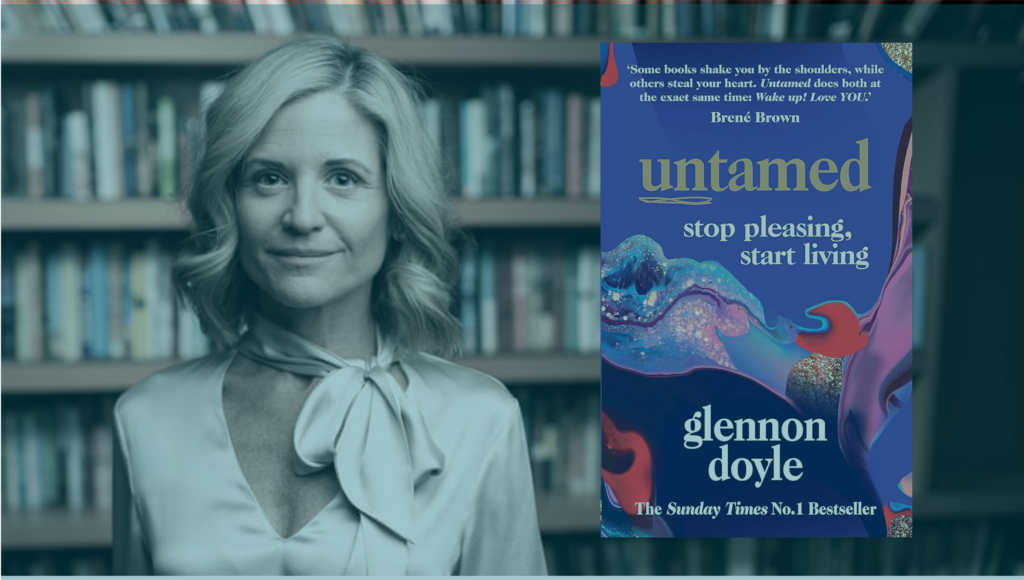
Table of Contents
What the book covers
Glennon Doyle’s Untamed is essentially a journey back to one’s truest self: that raw, uncensored, instinctive self that we often silence to fit expectations. The book is part memoir and part manifesto, blending her personal stories with sharp insights about identity, love, womanhood, boundaries, and freedom. As I moved through her chapters, it felt like witnessing someone strip away layers that were never truly theirs and finally breathe on their own terms. And that’s really what the book invites all of us to do: remember who we were before the world taught us who to be.
The book is structured through short, emotionally charged chapters, each one reading like a moment of awakening. She begins with the “cheetah” metaphor; a powerful image of a caged animal who runs because she remembers the wild she came from. This metaphor becomes the anchor for the entire book. Doyle uses it to show how many of us spend years performing roles, meeting social expectations, and suppressing desires simply because we were conditioned to believe that obedience, not authenticity, is the measure of a ‘good’ life.
Throughout Untamed, Glennon explores themes like motherhood, divorce, sexuality, faith, addiction, and relationships. But even deeper than the themes is the foundational idea that every woman carries an inner Knowing: a quiet, persistent truth beneath all the noise. She calls it the “inner voice” or “the Knowing,” and her journey is about learning to trust it even when it disrupts the lives we’ve built carefully and painfully.
One of the strongest elements of the book is its honesty about discomfort. Doyle doesn’t romanticize self-discovery. She openly acknowledges the chaos that comes with choosing yourself: the grief, the guilt, the conversations that shake you, the judgment that comes from choosing freedom over conformity. But she also shows how liberation isn’t loud or dramatic; sometimes it’s as simple as telling the truth to yourself and refusing to abandon your own needs.
Doyle’s conversations on boundaries are particularly striking. She talks about how much emotional labor women are conditioned to perform, often at the cost of their mental wellbeing. The idea that peace is not the absence of chaos but the presence of alignment stood out to me deeply. She reframes boundaries as clarity, not conflict: something I echo often in my coaching work.
The book also touches strongly on identity; identity that is shaped by society and identity that is reclaimed through consciousness. She dismantles the belief that self-sacrifice is a noble trait, challenging women to stop dimming themselves for the comfort of others. Her narration highlights how often we inherit scripts from childhood, culture, partners, and communities that shape our choices without us even noticing. Untamed becomes a mirror where readers can see themselves; not the conditioned self, but the original one underneath.
Her writing style blends emotional openness with practical wisdom. You’ll find reflections on motherhood next to reflections on social justice, all tied together with her trademark vulnerability. She writes about her relationship with her wife Abby with a gentleness that reinforces the book’s theme: love thrives when we stop performing and start existing honestly.
And through all of this, Doyle keeps returning to one simple idea: “You are allowed to want what you want.” That statement is radical in a world that teaches women to prioritize everyone else. She shows how liberation begins internally, not from grand gestures but from small decisions rooted in personal truth.
What makes Untamed powerful is not just the content but the emotional permission it gives. It invites you to unlearn, to question, to disrupt, and to rebuild, not out of rebellion, but out of self-respect. As someone deeply connected to resilience, communication, and human transformation, I felt the book resonate on a level beyond intellect. It is a call to return home to yourself.
Untamed – Glennon Doyle | Authenticity, Self-Liberation, Inner Knowing | Book Recommendations | International Mindset Academy
Why someone should read “Untamed – Glennon Doyle”
Someone should read Untamed because it offers something many people don’t realize they desperately need: permission to outgrow the life that no longer fits. This book is especially impactful for anyone who feels they are performing more than living; for those sensing an inner restlessness they can’t fully articulate. Doyle gives language to that restlessness and frames it not as a flaw but as guidance.
For women who have spent years balancing expectations, obligations, and invisible burdens, this book unpacks that emotional weight with clarity and compassion. It doesn’t promise easy solutions; instead, it encourages deep inner honesty. It’s a book that whispers: “You’re not crazy. You’re remembering yourself.”
From a coaching and mindset perspective, Untamed is a treasure because it aligns with core transformation principles: self-awareness, emotional ownership, and alignment-driven decision-making. Doyle’s message shows readers the cost of self-betrayal, and the freedom that emerges when you reclaim your voice. It offers practical insights on setting boundaries, building emotional resilience, navigating relationships consciously, and choosing authenticity over approval.
Another reason someone should read Untamed is its relevance to modern-day identity. In a world increasingly shaped by social pressures and curated digital perfection, Doyle challenges us to disconnect from the external scripts that limit us. She talks about unlearning: a concept that is vital for anyone on a personal growth journey. The idea that we must peel back our layers to find our unedited self is powerful, especially in a society where roles often overshadow individuality.
It’s also worth noting that the book is not just for women. Anyone who has struggled with expectations, identity confusion, emotional burnout, or internal contradictions will find resonance in these pages. The book prompts readers to ask uncomfortable questions:
– Whose life am I living?
– Whose dreams am I chasing?
– What am I pretending not to know?
– What version of myself am I betraying for acceptance?
And while these questions are heavy, Doyle’s writing creates safety around them. She shows that discomfort is a sign of growth, not danger.
For readers who follow leadership, resilience, communication, or personal development, all core themes of my work; this book complements those frameworks beautifully. It reinforces that strong leadership begins with self-leadership. It reminds us that resilience is not about enduring a misaligned life but having the courage to redesign it.
On a broader level, Untamed inspires conscious living. It urges readers to examine how much of their daily life is habit rather than intention. By highlighting the “Knowing,” Doyle encourages trust in intuition, something I deeply advocate in coaching. She shows how ignoring intuition leads to emotional stagnation, while honoring it brings alignment and peace.
This book is for anyone who wants to live unapologetically, not recklessly, but authentically. It’s for those who are ready to stop shrinking. It’s for those who are ready to stop apologizing for wanting more. Most importantly, it’s for those who are ready to stop abandoning themselves.
Untamed – Glennon Doyle | Authenticity, Self-Liberation, Inner Knowing | Book Recommendations | International Mindset Academy
What I learned from this book:
Reading Untamed was a deeply personal experience for me. It didn’t just give insights, it held up a mirror. One of the strongest lessons I absorbed was the importance of returning to my inner Knowing, especially as someone constantly navigating communication, leadership, and emotional landscapes. I realized how often we, even as guides and coaches, can slip into conditioned patterns without realizing it.
This book reminded me that alignment is not a destination but a daily practice. It taught me the power of pausing, listening inward, and honoring the truth that rises. Doyle’s framing of authenticity felt like a validation of choices I’ve made in my life, professionally and personally, where I consciously chose alignment over expectation. It made me reflect on how often women dilute themselves to maintain balance, when in reality, balance is born from being whole, not from being divided.
Another strong takeaway was the concept of boundaries rooted in clarity. I already understood boundaries as a leadership and communication tool, but Doyle’s approach deepened my understanding that boundaries are acts of self-trust. They protect the parts of us that we’re learning to honor. Through her writing, I saw how peace isn’t the absence of disturbance, it’s the presence of integrity. This shifted how I guide clients, helping them see boundaries not as walls, but as guide rails back to themselves.
The book also influenced how I look at emotional resilience. Doyle’s own journey taught me that resilience is not endurance; it’s rebirth. It’s the willingness to break patterns that betray us. It affirmed my belief that transformation requires disruption; some internal, some external, but always conscious.
One of the most personal shifts I felt was around identity. Doyle’s fearless reclamation of her truth reminded me of my own evolution, particularly the courage it takes to step into leadership roles that demand authenticity rather than performance. It made me more mindful of the stories I’ve inherited, the expectations I’ve internalized, and the way I deliberately choose introspection over autopilot.
As a Relationship Coach, I found her take on love refreshing. It reinforced the idea that relationships built on truth, vulnerability, and choice are stronger than relationships built on obligation. It validated the importance of emotional transparency, something I deeply advocate in my work.
But perhaps the most profound lesson was this: You are allowed to be fully yourself, even if the world around you prefers the edited version. And that reminder, simple yet transformative, has subtly shaped the way I now express myself, make decisions, and guide others.
Radhika Norli Chatterjee,
Vice President – PR & Marketing | Relationship Coach
International Mindset Academy,
internationalmindsetacademy.org
Hyderabad, Bharat (India).
Content Time Stamp:
- 7-Dec-2025 Published
Untamed – Glennon Doyle | Authenticity, Self-Liberation, Inner Knowing | Book Recommendations | International Mindset Academy