
“Whatever is worth doing at all is worth doing well.” This simple yet profound idea challenges the mediocre standards we sometimes accept in our rushed, distracted world. At International Mindset Academy, we see this principle not as pressure to be perfect, but as an invitation to live with intention, purpose, and authentic excellence. Whether you are leading a team, building a business, raising a family, or simply navigating your own personal growth, the mindset you bring to your actions shapes everything that follows.
Excellence is not about being the best in the room or outshining others. It is about honoring your own capacity, showing up fully for what matters, and refusing to settle for half-hearted effort when something genuinely deserves your care. This blog explores why mediocre has become so common, how mindset determines the quality of your achievement, and what practical steps you can take today to cultivate excellence in all you do. You will discover how ancient wisdom, modern psychology, and real-world coaching insights come together to create lasting transformation. By the end, you will have actionable strategies to elevate your work, relationships, and inner life from average to truly meaningful.


Table of Contents
Why Mediocre Feels Safe (But Costs You Everything)
We live in a culture that celebrates hustle but often rewards shortcuts. Mediocre has become the hidden default, dressed up as “good enough” or “realistic.” But when you look closer, mediocre is not neutral. It is a slow erosion of possibility, a quiet compromise that dulls your sense of purpose and diminishes your potential over time.
Why do so many of us drift toward mediocre? The answer lies in how our minds manage risk, energy, and social expectations. From an early age, we learn that standing out can be uncomfortable. Doing something well, truly well, requires focus, patience, and vulnerability. It means others will notice, judge, or hold you to a higher standard. Mediocre, by contrast, lets you blend in. It asks less of you and promises safety in the crowd.
But that safety is an illusion. When you settle for mediocre effort, mediocre relationships, or mediocre results, you are not protecting yourself. You are trading your long-term fulfillment for short-term comfort. The cost shows up in subtle ways at first. You feel disconnected from your work, uninspired by your days, or quietly resentful that others seem to be thriving while you feel stuck. Over time, mediocre becomes not just what you do, but who you are. Your mindset adapts, your expectations lower, and achievement feels increasingly out of reach.
Excellence, on the other hand, demands that you show up fully. It asks you to care, to try, to risk disappointment or criticism in service of something meaningful. This is where mindset becomes everything. A mindset rooted in mediocre says, “Why bother? It is probably not worth the effort.” A mindset rooted in excellence says, “If I am going to do this, let me do it in a way that honors my time, my values, and the people I serve.”
Consider a professional who shows up to meetings unprepared, offers half-formed ideas, and coasts on past successes. On the surface, they may seem productive. But underneath, they know they are capable of more. That gap between their potential and their effort creates internal friction. They lose self-respect, and over time, others lose respect for them too. The tragedy is not that they failed spectacularly. It is that they never really tried.
Now consider someone who approaches even small tasks with care. They prepare thoughtfully, listen deeply, and contribute meaningfully. They do not do this to impress others or chase accolades. They do it because their mindset says, “This matters. I matter. The people affected by my work matter.” That internal alignment creates a different kind of energy. It builds momentum, trust, and genuine achievement.
The principle “whatever is worth doing at all is worth doing well” is not about perfectionism. Perfectionism is a trap, a relentless inner critic that says nothing you do will ever be enough. Excellence is different. Excellence is compassionate. It recognizes your limits, honors your growth, and asks only that you bring your best self to what you have chosen to do. If something is not worth doing well, perhaps it is not worth doing at all. That discernment is powerful.
This mindset shift requires practice. It starts with noticing where mediocre has crept into your life. Are there relationships where you show up distracted or disengaged? Projects you rush through without real thought? Conversations where you nod along but do not truly listen? These patterns are not moral failures. They are invitations to realign.
Excellence also requires rest. Paradoxically, one reason mediocre feels so common is that people are exhausted. They are stretched thin, overwhelmed by competing demands, and running on fumes. In that state, doing anything well feels impossible. This is where mindset work becomes essential. You must learn to say no to what drains you so you can say yes, fully and wholeheartedly, to what truly matters. Achievement is not about doing everything. It is about doing the right things well.
When you commit to excellence, you also commit to growth. You accept that you will make mistakes, that some efforts will fall short, and that feedback will sting at times. But you also discover that the process of striving, learning, and improving is where fulfillment lives. Mediocre keeps you safe, but it also keeps you small. Excellence invites you to step into your full capacity, to contribute meaningfully, and to experience the deep satisfaction that comes from knowing you gave something your all.
The cost of mediocre is not just what you fail to achieve. It is who you fail to become. Every time you choose half-hearted effort over wholehearted presence, you reinforce a story about yourself. You tell yourself you are not capable, not worthy, or not ready. Over time, that story becomes your reality. But the good news is that mindset is malleable. You can rewrite the narrative at any moment. You can decide, right now, that whatever you do next will be done with care, intention, and excellence.
“Quality is not an act, it is a habit.” – Aristotle
The 5 Pillars of an Excellence Mindset
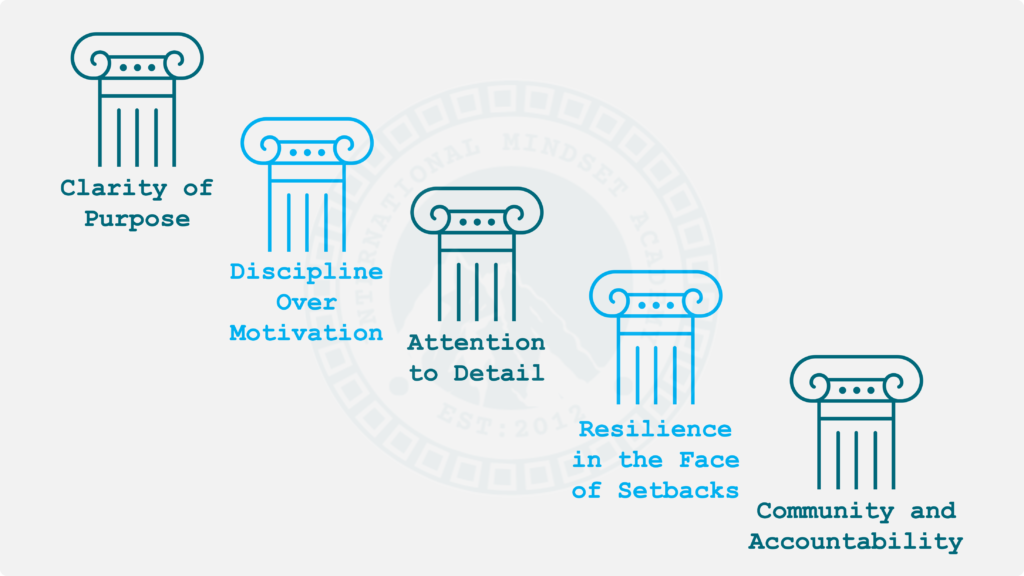
Moving from mediocre to excellence is not about willpower alone. It requires a fundamental shift in how you think, decide, and act. At International Mindset Academy, we teach that excellence is built on five interconnected pillars. Each one supports the others, creating a stable foundation for sustained achievement and authentic growth.
Pillar 1: Clarity of Purpose
You cannot pursue excellence if you do not know why you are pursuing it. Clarity is the first pillar because it answers the question: What am I doing this for? When your purpose is vague or borrowed from others, motivation fades quickly. But when you connect deeply to your own reasons, your own values, and your own vision, excellence becomes not a burden but a natural expression of who you are.
Start by asking yourself what truly matters. Not what should matter, or what others expect, but what resonates at your core. Is it serving your family well? Creating work that solves real problems? Leading with integrity? Building a legacy? Once you identify your purpose, let it guide your choices. Every time you feel pulled toward mediocre, return to your why. Let it anchor you.
Pillar 3: Attention to Detail
Mediocre often hides in the small things. A rushed email, a half-cleaned space, a conversation where you only half listen. Excellence lives in the details. It is the extra minute spent proofreading, the thoughtful follow-up, the care you bring to seemingly minor interactions. These details may seem insignificant in isolation, but together they form the fabric of your reputation, your relationships, and your results.
Attention to detail is not about being fussy or controlling. It is about respect. Respect for your own standards, respect for the people who will be affected by your work, and respect for the process itself. When you care about the details, people notice. They feel it. And that care builds trust.
Pillar 2: Discipline Over Motivation
Motivation is fleeting. It comes and goes, rising with excitement and fading when the work gets hard. Discipline, by contrast, is steady. Discipline is what carries you through the days when you do not feel inspired, when the task is tedious, or when no one is watching. Excellence requires discipline because it demands consistency. You cannot build anything meaningful with sporadic effort.
Discipline is not about being rigid or joyless. It is about creating systems and routines that support your goals. It is about showing up even when you do not feel like it, trusting that the act of showing up is itself an achievement. Over time, discipline becomes easier. It transforms into habit, and habit becomes character.
Pillar 4: Resilience in the Face of Setbacks
Excellence is not a straight line. There will be failures, missteps, and moments when your best effort falls short. The difference between mediocre and excellence is not the absence of failure. It is how you respond. Mediocre gives up or blames others. Excellence learns, adjusts, and tries again.
Resilience is built through mindset. It is the belief that setbacks are not evidence of your inadequacy but opportunities for growth. It is the willingness to sit with disappointment, extract the lesson, and apply it moving forward. Over time, resilience becomes one of your greatest assets. It signals to yourself and others that you are committed, not just when things are easy, but especially when they are hard.
Pillar 5: Community and Accountability
No one achieves excellence alone. You need people who challenge you, support you, and hold you to your own standards. At International Mindset Academy, we emphasize the power of community because isolation breeds mediocre. When you are only accountable to yourself, it is too easy to rationalize shortcuts or lower your expectations.
Find people who share your commitment to growth. Join groups, seek mentors, hire coaches. Create structures where you report progress, share struggles, and celebrate wins. Community does not just keep you accountable. It reminds you that you are not alone in your pursuit of something better.
These five pillars work together. Clarity gives you direction. Discipline keeps you moving. Attention to detail ensures quality. Resilience carries you through challenges. The community provides support. When all five are in place, excellence stops feeling like a distant goal and starts feeling like your natural way of being.
Building these pillars takes time. You do not wake up one day with perfect clarity or ironclad discipline. But you can start today. Choose one pillar and commit to strengthening it this week. Notice where mediocre has been your default and make one small shift. That shift will ripple outward, touching every area of your life.

Real Stories of Transformation from Mediocre to Excellence
Theory matters, but stories make it real. At International Mindset Academy, we have guided hundreds of individuals from all walks of life through the journey from mediocre to excellence. These transformations are not dramatic overnight successes. They are quiet, steady shifts in mindset, action, and identity. Here are three stories that illustrate what this journey looks like in practice.
Priya: From Overwhelmed Professional to Intentional Leader
Priya came to us feeling stuck. She held a mid-level position in a growing company, but her days felt chaotic. She was constantly busy, yet rarely felt she was achieving anything meaningful. Her work was mediocre by her own admission. She met deadlines but did not excel. She attended meetings but did not contribute ideas. She was there, but not really there.
Through coaching, Priya realized her problem was not lack of ability. It was a lack of clarity. She had never defined what excellence looked like for her. She was reacting to demands instead of leading her own priorities. We worked together to identify her core purpose: she wanted to be a leader who developed others, not just someone who completed tasks.
With that clarity, everything changed. Priya started saying no to projects that did not align with her purpose. She invested time in mentoring junior team members. She prepared more thoughtfully for meetings and spoke up with confidence. Within six months, her manager noticed. Priya was promoted, not because she worked longer hours, but because her work reflected intention and care. She had moved from mediocre to excellence by changing her mindset first.
Raj: From Scattered Entrepreneur to Disciplined Builder
Raj was a creative entrepreneur with big dreams and scattered execution. He would start projects with enthusiasm, then abandon them when they got difficult. His business was surviving, but it was not thriving. Deep down, Raj knew he was capable of more, but he kept sabotaging himself with inconsistency.
The breakthrough came when Raj admitted he was afraid. Afraid that if he really tried and still failed, it would mean he was not good enough. Mediocre felt safer because it gave him an excuse. “I could do better if I really focused,” he would tell himself. But he never focused, so he never had to face the possibility of falling short.
We worked on building discipline. Not through harsh self-criticism, but through small, sustainable systems. Raj committed to one focused hour each morning before checking email or social media. He tracked his progress and shared it weekly with an accountability partner. Slowly, his mindset shifted. He started finishing projects. His business grew. More importantly, Raj grew. He stopped hiding behind mediocre and started owning his capacity for excellence.
Ananya: From Burned Out Caregiver to Balanced Contributor
Ananya was a dedicated mother and community volunteer. She prided herself on being there for everyone, but she was exhausted. Her health suffered, her relationships felt strained, and she could not remember the last time she did anything just for herself. On the surface, her life looked full. But underneath, she was running on empty, and everything she did felt mediocre because she had nothing left to give.
Ananya’s transformation began with permission. Permission to rest. Permission to say no. Permission to prioritize her own well-being without guilt. This was not selfish. It was essential. We explored the idea that excellence requires energy, and energy requires boundaries.
Ananya started small. She stepped back from one volunteer commitment. She carved out fifteen minutes each morning for quiet reflection. She asked her family to help with household tasks instead of doing everything herself. At first, it felt uncomfortable. But over time, Ananya noticed she had more to offer when she showed up. Her presence was fuller, her contributions more thoughtful. She was no longer spreading herself thin. She was choosing where to invest her energy and doing those things well.
These stories share a common thread. Each person had to confront where mediocre had become their default. Each had to identify what was holding them back, whether it was lack of clarity, fear, or exhaustion. And each had to make intentional changes, supported by mindset work and accountability. The results were not just external. Priya, Raj, and Ananya all reported feeling more aligned, more fulfilled, and more like themselves. That is what excellence offers. Not just better outcomes, but a better relationship with your own life.
Your story will be different. Your challenges are unique. But the principles remain the same. Excellence is available to you when you decide it is worth pursuing and when you commit to the mindset and actions that make it possible.
“We are what we repeatedly do. Excellence, then, is not an act, but a habit.” – Will Durant
Ancient Wisdom Meets Modern Achievement
The pursuit of excellence is not a modern invention. For thousands of years, philosophers, spiritual teachers, and wisdom traditions have explored what it means to live well and act with integrity. At International Mindset Academy, we draw from these ancient sources because they offer timeless insights that complement today’s achievement science.
In the Bhagavad Gita, Lord Krishna teaches Arjuna about the concept of Dharma, which can be understood as one’s sacred duty or righteous path. Krishna emphasizes that true fulfillment comes not from avoiding action, but from performing your duty with full commitment, without attachment to the fruits of that action. This is excellence in its purest form. You do what is yours to do, and you do it well, not because you are chasing rewards, but because the act itself is worthy.
This teaching directly counters mediocre. Mediocre says, “Why bother if the outcome is uncertain?” Dharma says, “Do your best because it is your nature to contribute, regardless of what comes next.” This mindset frees you from the paralysis of overthinking and the anxiety of needing guaranteed success. It anchors you in the process, in the moment, in the quality of your effort.
Buddhist mindfulness traditions offer another lens. Mindfulness teaches that excellence emerges from presence. When you are fully present, you notice details you would otherwise miss. You respond thoughtfully instead of reacting impulsively. You bring care to even mundane tasks, transforming them into opportunities for practice. The Zen concept of “Shoshin,” or beginner’s mind, reminds us that excellence is not about knowing everything. It is about approaching each moment with openness, curiosity, and willingness to learn.
Stoic philosophy, practiced by figures like Marcus Aurelius and Epictetus, emphasizes personal responsibility and the pursuit of virtue. The Stoics believed that external achievements are less important than the quality of your character. Excellence, from a Stoic perspective, is measured not by applause or recognition, but by whether you acted with wisdom, courage, justice, and temperance. This internal standard protects you from the whims of external validation. You do not need others to tell you if you have lived well. You know.
Modern psychology and neuroscience validate these ancient insights. Research on flow states, pioneered by psychologist Mihaly Csikszentmihalyi, shows that people are happiest and most productive when fully engaged in challenging tasks that match their skill level. This is excellence in action. It is not easy, but it is deeply satisfying. Studies on habit formation reveal that consistent small actions reshape neural pathways, making excellence feel more natural over time. What starts as effort becomes automatic.
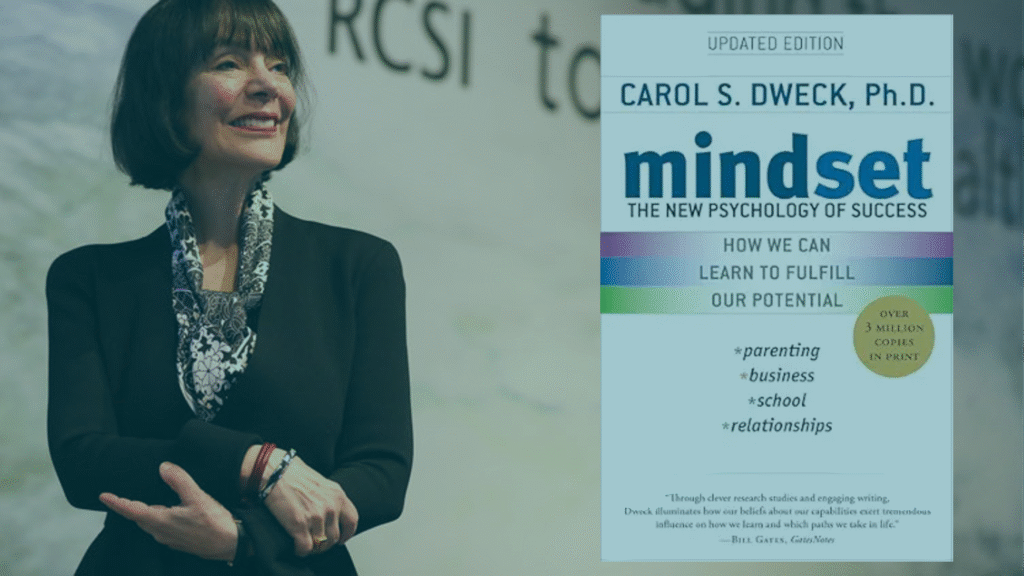
The concept of a growth mindset, developed by Carol Dweck, aligns with ancient teachings that emphasize learning and resilience. A growth mindset says that abilities can be developed through dedication and hard work. This view creates a love of learning and a resilience essential for achievement. Mediocre clings to a fixed mindset, believing that talent is innate and effort is pointless. Excellence embraces growth, knowing that every challenge is an opportunity to expand.
When you combine ancient wisdom with modern science, a powerful picture emerges. Excellence is not a luxury or a burden. It is a natural expression of human potential. It honors the past while embracing the present. It asks you to live fully, act intentionally, and contribute meaningfully. Whether you draw inspiration from the Gita, from mindfulness, from Stoicism, or from contemporary research, the message is consistent: whatever is worth doing at all is worth doing well.
At International Mindset Academy, we help people integrate these perspectives into daily practice. We teach that excellence is not about perfection or comparison. It is about alignment. When your actions reflect your values, when your mindset supports your goals, and when your effort honors your purpose, you are living in excellence. That is the ultimate achievement.

“The quality of a person’s life is in direct proportion to their commitment to excellence, regardless of their chosen field of endeavor.” – Vince Lombardi
Blog Summary
This blog explored the principle that “whatever is worth doing at all is worth doing well” and how moving from mediocre to excellence transforms not just your results, but your entire mindset and sense of self. We examined why mediocre feels safe but ultimately costs you fulfillment, purpose, and achievement. We outlined the five pillars of an excellence mindset: clarity of purpose, discipline over motivation, attention to detail, resilience in setbacks, and community support. Real stories from International Mindset Academy clients demonstrated how these principles play out in practice, showing that transformation is possible for anyone willing to commit.
We also connected ancient wisdom from the Bhagavad Gita, Buddhist mindfulness, and Stoic philosophy with modern psychology and neuroscience, revealing that excellence has always been a central human aspiration. The message is clear: excellence is not about being perfect or better than others. It is about honoring your own capacity, showing up fully, and contributing meaningfully. It is about building a mindset that refuses to settle for half-hearted effort when something genuinely matters.
If you are ready to move from mediocre to excellence, start today. Reflect on where mediocre has become your default. Choose one area where you can bring more care, intention, and presence. Commit to one of the five pillars and practice it consistently. Seek support, whether through coaching, community, or accountability partnerships. Remember that excellence is not a destination. It is a way of being, a daily practice, a commitment to living fully. When you embrace this mindset, you do not just achieve more. You become more.

FAQs
What is the difference between excellence and perfectionism?
Excellence is compassionate and process-oriented. It asks you to bring your best effort and care to what matters, while accepting that mistakes and growth are part of the journey. Perfectionism, by contrast, is fear-based and outcome-focused. It demands flawlessness and punishes anything less, creating anxiety and paralysis. Excellence celebrates progress; perfectionism fears imperfection.
How do I know if I am settling for mediocre?
Notice how you feel about your work, relationships, and daily actions. If you often feel disconnected, uninspired, or vaguely dissatisfied, mediocre may have crept in. Ask yourself: Am I showing up fully? Am I engaged and present, or just going through the motions? Honest self-reflection reveals where mediocre has become your default.
Can excellence be sustained without burnout?
Yes, if you approach it correctly. Excellence requires rest, boundaries, and focus. It is not about doing everything well; it is about doing the right things well. Say no to what drains you. Prioritize what aligns with your purpose. Build sustainable habits instead of relying on constant effort. Excellence thrives when supported by self-care and intentional energy management.
How long does it take to shift from a mediocre mindset to an excellence mindset?
There is no fixed timeline. Mindset shifts can begin immediately, but embodying them consistently takes practice. Some people notice changes within weeks; for others, it unfolds over months. The key is daily commitment. Small, consistent actions compound over time, reshaping your habits, beliefs, and identity. Progress matters more than speed.
What if I fail even when I try for excellence?
Failure is part of the process. Excellence does not guarantee perfect outcomes; it guarantees that you gave your best effort. When you fail, you learn, adjust, and grow. That growth is itself a form of achievement. Mediocre avoids trying to avoid failure. Excellence embraces trying because the act of striving is where meaning lives.
Reflective Questions for Readers

Free Downloadable Worksheets
Purpose Clarity Map
Mediocre to Excellence Audit
The 5 Pillars Personal Action Plan

Book Recommendations

Blog details
Author: Abhisshek Om Chakravarty
Original Published On: 7th Oct 2019
Revision I: 9th Oct 2025
Artical ID: AOC/46/373