
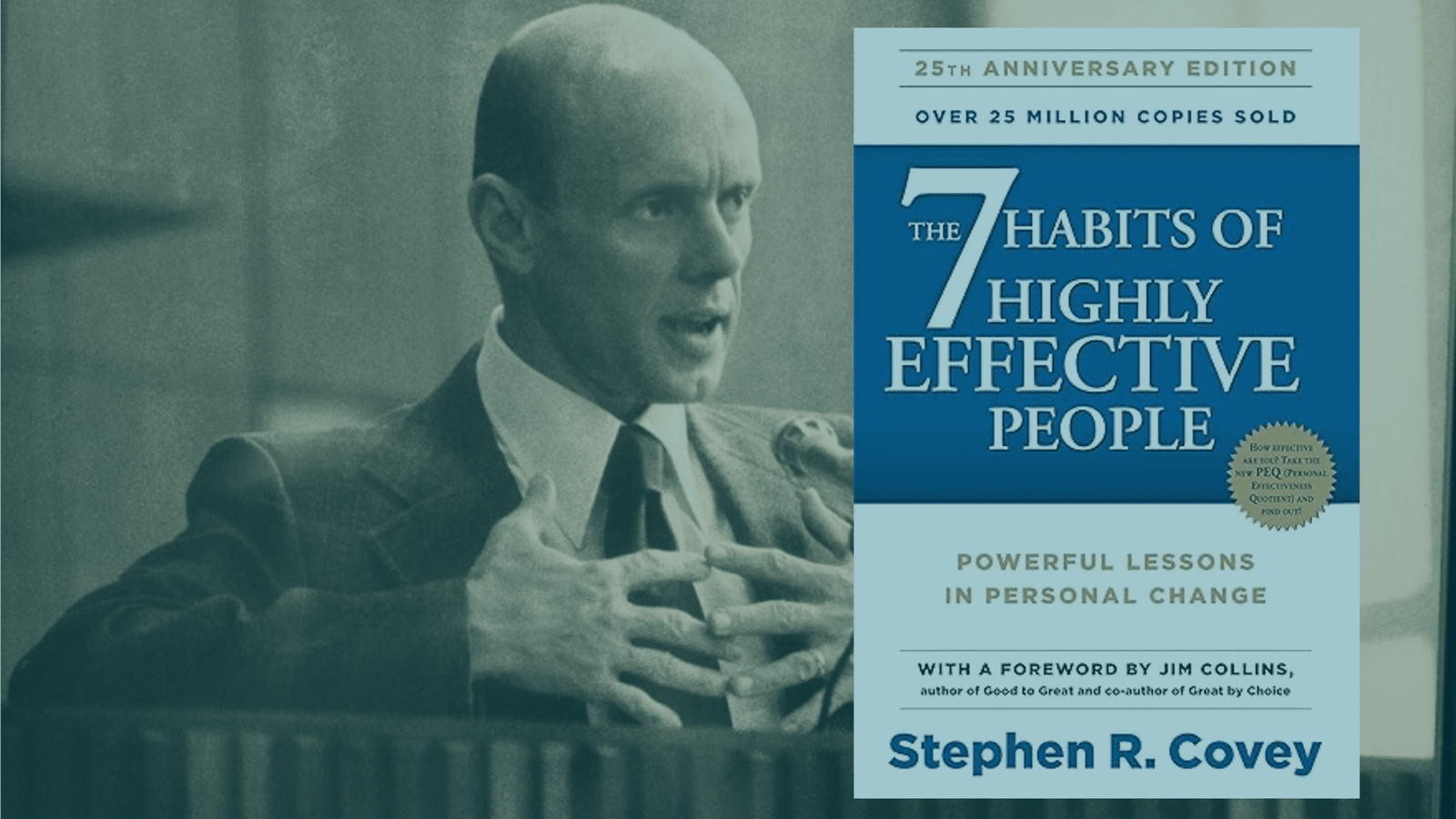

“The 7 Habits of Highly Effective People” by Stephen R. Covey offers a timeless roadmap from mediocre habits to true excellence through character-driven effectiveness and leadership. Covey’s principle-centered approach teaches proactivity, purpose, and prioritization, helping readers achieve sustainable success in work and life. Perfect for leaders, coaches, and anyone committed to personal growth, this book shows that excellence is built on integrity, empathy, and continuous renewal. Whether you seek professional achievement or personal fulfillment, Covey’s seven habits provide the foundation for a life well lived.
Table of Contents
What the book covers
“The 7 Habits of Highly Effective People” by Stephen R. Covey is a foundational text in personal development and leadership. First published in 1989, it remains one of the most influential books on effectiveness, character, and achievement. Covey presents a principle-centered approach to solving personal and professional problems, emphasizing that true success comes from aligning your actions with timeless principles of fairness, integrity, honesty, and human dignity.
The book is organized around seven habits, divided into three categories: private victory, public victory, and renewal. The first three habits focus on self-mastery and moving from dependence to independence. Habit 1, “Be Proactive,” teaches that you are responsible for your own life. You cannot blame circumstances, conditions, or conditioning for your behavior. You choose your response to any situation. This habit challenges mediocre thinking, which often blames external factors for lack of progress.
Habit 2, “Begin with the End in Mind,” is about defining your values and vision before you start. Covey encourages readers to write a personal mission statement that reflects their core principles. This clarity ensures that your daily actions align with your long-term goals, a key component of excellence. Habit 3, “Put First Things First,” focuses on time management and prioritization. Covey introduces the concept of managing time based on importance, not urgency. He teaches readers to focus on what is important but not yet urgent, which is where growth, planning, and excellence live.
The next three habits address interdependence and building effective relationships. Habit 4, “Think Win-Win,” promotes a mindset of mutual benefit in all interactions. Covey argues that life is not a zero-sum game; you do not have to win at someone else’s expense. Habit 5, “Seek First to Understand, Then to Be Understood,” emphasizes empathic listening. Most people listen with the intent to reply, not to understand. Covey teaches that truly understanding others builds trust and opens the door to genuine collaboration. Habit 6, “Synergize,” is about creative cooperation, where the whole is greater than the sum of its parts.
The final habit, “Sharpen the Saw,” is about self-renewal. Covey divides this into four dimensions: physical, mental, emotional, and spiritual. He stresses that you cannot sustain excellence without regular renewal in all these areas. This habit prevents burnout and ensures that your capacity for achievement grows over time.
Throughout the book, Covey emphasizes character over personality. He argues that many popular approaches to success focus on superficial techniques, what he calls the “personality ethic.” But lasting effectiveness comes from developing character, the “character ethic.” This distinction is crucial for anyone committed to excellence. Mediocre may rely on shortcuts or image management, but excellence requires substance.
Covey’s writing is clear, thoughtful, and filled with real-world examples. He draws from his own experiences, as well as from literature, philosophy, and psychology. The book is structured in a way that builds logically, with each habit reinforcing the previous one. It is not a quick read, but it is a transformative one.
Why You Should Read “The 7 Habits of Highly Effective People”
- Comprehensive framework for excellence
- Timeless principles, not quick fixes
- Holistic approach to life balance
- Deeply practical with actionable tools
- Apply habits to life immediately
- Focus on interdependence and collaboration
- Invaluable guide for effective leaders
- Essential principles for thoughtful parenting
- Build cultures where excellence thrives
- Think beyond your lifetime impact
You should read “The 7 Habits of Highly Effective People” if you want a comprehensive framework for personal and professional excellence. This is not a book about quick fixes or trendy tactics. It is a book about principles, and principles do not change. Whether you read it today or 30 years from now, the wisdom remains relevant.
One of the greatest strengths of this book is its holistic approach. Covey does not just focus on productivity or success in isolation. He addresses your relationships, your values, your sense of purpose, and your well-being. He shows that excellence in one area of life supports excellence in others. You cannot be truly effective if your personal life is in chaos, just as you cannot thrive at home if you are constantly stressed at work. The seven habits create balance and integration.
The book is also deeply practical. Covey does not just share ideas; he provides exercises, tools, and templates. You can apply these habits immediately. Whether you need to improve your time management, resolve a conflict, or clarify your goals, the book offers concrete steps. Many readers return to “The 7 Habits” repeatedly throughout their lives, finding new insights each time.
Another reason to read this book is its focus on interdependence. Covey recognizes that no one achieves greatness alone. The habits that address relationships and collaboration are just as important as those focused on self-discipline. In a world that often celebrates rugged individualism, this book reminds you that connection, empathy, and teamwork are essential to sustained achievement.
For leaders, this book is invaluable. The principles Covey teaches apply to managing teams, building cultures, and inspiring others. Leaders who embody these habits create environments where excellence thrives. They model proactivity, clarity, and integrity, and their teams respond in kind.
Parents will also find immense value in “The 7 Habits.” Covey shows how these principles can guide parenting decisions, helping you raise children who are responsible, empathetic, and self-directed. The habits are not just for adults; they are life skills that benefit people of all ages.
Finally, “The 7 Habits” is a book about legacy. Covey challenges you to think about the impact you want to have, not just in your lifetime, but beyond it. He asks you to consider how you will be remembered and to live in a way that aligns with that vision. This long-term perspective is the antidote to mediocre, which focuses on short-term gains and immediate gratification.
What I learned from this book
“The 7 Habits of Highly Effective People” was one of the first books that helped me understand the difference between doing and being. Early in my coaching career, I focused heavily on helping clients achieve goals. But I noticed that even when they hit their targets, they often felt unfulfilled. Something was missing. Covey’s book showed me that the missing piece was alignment. People were achieving outcomes, but those outcomes did not reflect their true values or purpose.
Habit 2, “Begin with the End in Mind,” had a profound impact on me. I took Covey’s advice and wrote my own personal mission statement. It was uncomfortable at first. I had to confront what truly mattered to me, not what I thought should matter or what others expected. But once I had that clarity, my decisions became easier. I could evaluate opportunities, relationships, and commitments based on whether they aligned with my mission. This practice transformed how I show up, both personally and professionally.
The concept of the time management matrix, introduced in Habit 3, also changed my life. Covey divides tasks into four quadrants based on urgency and importance. Most people spend their time in Quadrant 1 (urgent and important) and Quadrant 3 (urgent but not important), reacting to crises and distractions. Excellence lives in Quadrant 2 (important but not urgent), where you focus on prevention, planning, relationship building, and growth. I started scheduling Quadrant 2 activities intentionally, and it made all the difference. I was no longer just busy; I was purposeful.
Habit 5, “Seek First to Understand, Then to Be Understood,” revolutionized how I coach. I realized I was often jumping in with advice before truly understanding a client’s situation. Covey taught me to listen empathically, to put aside my agenda and fully enter their world. When I did this, clients felt heard, and our conversations became deeper and more productive. This habit also improved my personal relationships. Listening became a gift I could offer, rather than a step I rushed through on my way to speaking.
The idea of sharpening the saw, Habit 7, reminded me that I cannot pour from an empty cup. In the pursuit of helping others achieve excellence, I sometimes neglected my own renewal. I started building regular practices into my life: physical exercise, reading, time in nature, and spiritual reflection. These practices did not take me away from my work; they made my work better. I showed up more energized, more creative, and more present.
One of the most enduring lessons from Covey’s book is the principle of character ethic over personality ethic. This distinction helped me see that true excellence is not about appearing successful; it is about being rooted in integrity, honesty, and service. I encourage my clients to focus on who they are becoming, not just what they are achieving. This shift in focus creates lasting transformation.
“The 7 Habits” also reinforced my belief in the power of community. Covey’s habits are not meant to be practiced in isolation. They come alive in relationships, in teams, in families. I have built a community at International Mindset Academy where people support each other in living these principles. That community has been one of the most rewarding aspects of my work.
Abhisshek Om Chakravarty,
Mindset And Disrupt Coach,
International Mindset Academy,
internationalmindsetacademy.org
Hyderabad, Bharat (India).
Instagram | LinkedIn | Youtube | Facebook | X [Twitter]
Content Time Stamp:
- 6-Dec-2018: Published