
“Mindset: The New Psychology of Success” by Carol S. Dweck reveals how shifting from a fixed to a growth mindset transforms mediocre effort into lasting excellence. Dweck’s research shows that believing in your ability to grow is the foundation of achievement, resilience, and fulfillment. Perfect for leaders, parents, and anyone committed to personal development, this book offers practical strategies for cultivating a mindset that embraces challenges, learns from failure, and values effort. Whether you seek professional success or personal growth, discover how mindset shapes everything you achieve.
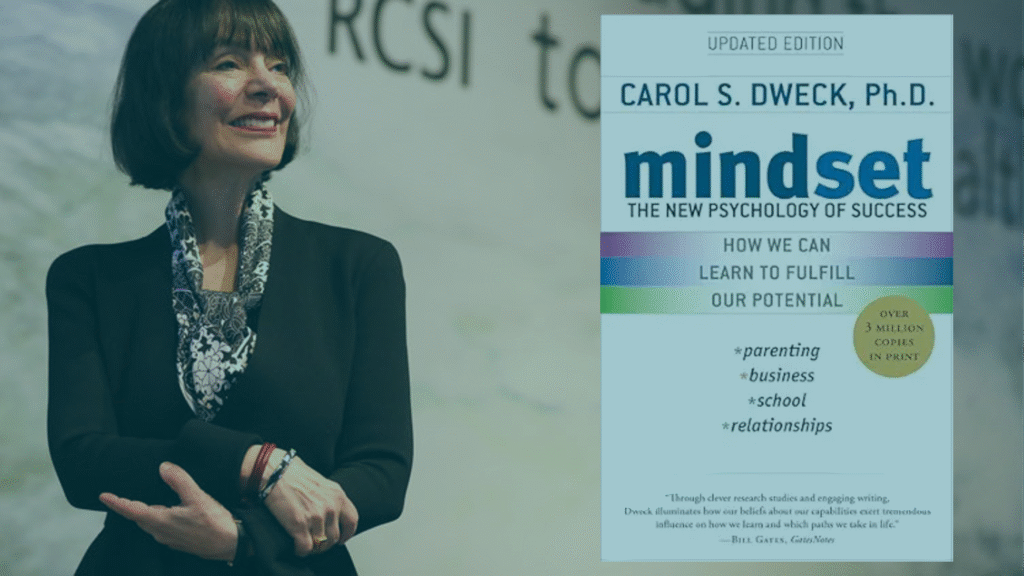
Table of Contents
What the book covers
“Mindset: The New Psychology of Success” by Carol S. Dweck is a groundbreaking exploration of how our beliefs about our abilities shape our lives. Dweck, a renowned psychologist, introduces the concept of fixed versus growth mindsets and shows how these mindsets influence everything from academic achievement to relationships to professional success.
At the heart of the book is a simple but profound idea: people with a fixed mindset believe that their abilities, intelligence, and talents are static. They think they are either good at something or they are not, and there is little they can do to change that. This mindset leads to a fear of failure, a tendency to avoid challenges, and a belief that effort is pointless. It is the foundation of mediocre because it discourages growth and risk-taking.
People with a growth mindset, on the other hand, believe that abilities can be developed through dedication and hard work. They see challenges as opportunities to learn, failure as feedback, and effort as the path to mastery. This mindset fosters resilience, curiosity, and a love of learning. It is the foundation of excellence.
Dweck draws on decades of research to illustrate how mindsets develop and how they affect behavior. She shares studies with children, athletes, business leaders, and artists, showing that mindset transcends age, field, and circumstance. One of the most powerful examples is her research with students. When students are praised for their intelligence (“You are so smart”), they develop a fixed mindset and become afraid to take on harder challenges. But when students are praised for their effort (“You worked so hard on that”), they develop a growth mindset and embrace challenges.
The book explores how mindset shows up in different areas of life. In sports, athletes with a growth mindset bounce back from losses and continually improve, while those with a fixed mindset plateau or crumble under pressure. In business, leaders with a growth mindset create cultures of innovation and learning, while those with a fixed mindset foster defensiveness and stagnation. In relationships, a growth mindset leads to healthier communication and deeper connection, while a fixed mindset breeds judgment and rigidity.
Dweck also addresses the question of whether mindset can change. The answer is yes. She provides strategies for cultivating a growth mindset, starting with awareness. Simply learning about the two mindsets can begin to shift how you think. She encourages readers to notice their fixed mindset triggers, those moments when they feel defensive, threatened, or tempted to give up. Then, she guides them to reframe those moments with a growth mindset lens.
The book is accessible, engaging, and filled with real-world examples. Dweck’s writing is clear and warm, making complex psychological concepts easy to understand. It is a book that speaks to parents, teachers, leaders, and anyone interested in personal development.

Why You Should Read “Mindset: The New Psychology of Success”
- Understand why people thrive differently
- Break free from limiting beliefs
- Learn practical growth mindset strategies
- Essential reading for effective leaders
- Recover faster from setbacks
- Transform your relationships through growth
- Change your mindset anytime
- Raise resilient, challenge-embracing children
- Unlock others’ potential through understanding
- Advance your career through development
You should read “Mindset” if you want to understand why some people thrive while others stagnate, even when they start with similar abilities. This book reveals that the difference often comes down to mindset. It is not about talent or intelligence in isolation. It is about whether you believe you can grow.
One of the most compelling reasons to read “Mindset” is that it frees you from limiting beliefs. If you have ever thought “I am just not good at that” or “I do not have what it takes,” this book will challenge those assumptions. Dweck shows that abilities are not fixed. You can improve at anything if you are willing to put in the effort and learn from mistakes. This realization is liberating and empowering.
The book is also incredibly practical. Dweck does not just describe the two mindsets; she shows you how to cultivate a growth mindset in yourself and others. Whether you are a parent trying to raise resilient children, a teacher working with struggling students, or a professional seeking to advance your career, the strategies in this book will help you foster growth and excellence.
For leaders, “Mindset” is essential reading. Dweck demonstrates that leaders with a growth mindset create healthier, more productive organizations. They encourage innovation, welcome feedback, and support their teams in taking risks. They understand that talent is not enough; development is what matters. If you want to build a culture where people thrive, you need to start by cultivating a growth mindset yourself.
The book is also valuable for anyone facing setbacks. Dweck’s research shows that people with a growth mindset recover from failure faster and more effectively. They do not see failure as evidence of their inadequacy. They see it as part of the learning process. This resilience is critical for anyone pursuing excellence. You will face obstacles, and how you respond will determine whether you move forward or stay stuck.
Another reason to read “Mindset” is its impact on relationships. Dweck shows that people with a fixed mindset often expect their partners to be perfect and feel threatened when problems arise. People with a growth mindset, however, see relationships as opportunities to grow together. They communicate openly, work through challenges, and believe that love and connection can deepen over time. This perspective transforms how you approach intimacy and partnership.
Finally, “Mindset” is a hopeful book. It shows that you are not stuck with the mindset you have today. You can change. You can adopt a growth mindset at any age, in any circumstance. This message is especially important for anyone who feels trapped by past failures or current limitations. Dweck gives you permission to start fresh, to believe in your potential, and to commit to the journey of growth.
What I learned from this book
Reading “Mindset” was a turning point in my understanding of coaching and personal transformation. Before encountering Dweck’s work, I knew that some clients made rapid progress while others seemed stuck, even when they had similar goals and resources. Dweck’s research helped me see that the difference was often mindset. Clients with a growth mindset embraced challenges, learned from feedback, and kept going despite setbacks. Clients with a fixed mindset avoided challenges, took criticism personally, and gave up easily.
This insight changed how I coach. I started assessing clients’ mindsets early in our work together. I would listen for fixed mindset language: “I am just not good at this.” “I do not have the talent.” “I failed, so I must not be capable.” When I heard these phrases, I knew we needed to address mindset before diving into strategies or goals. I introduced the concept of growth mindset, and in many cases, that alone shifted the trajectory of our coaching relationship.
One of the most powerful lessons I took from “Mindset” is the importance of praising effort, not outcomes. I realized I had been inadvertently reinforcing fixed mindsets by celebrating results without acknowledging the process. Now, I make it a point to recognize effort, resilience, and learning. When a client makes progress, I say, “Look at how much you have grown through consistent effort,” not just “Great job achieving your goal.” This small shift reinforces the growth mindset and encourages continued development.
Dweck’s concept of mindset triggers also resonated deeply with me. She explains that even people with a generally growth-oriented mindset can slip into a fixed mindset under certain conditions, such as stress, criticism, or comparison. I noticed this in my own life. When I faced a difficult challenge or received negative feedback, my first reaction was often defensive. I would think, “Maybe I am not cut out for this.” Recognizing that reaction as a fixed mindset trigger helped me pause, reframe, and respond with curiosity instead of defensiveness.
The book also influenced how I approach failure. Dweck’s research shows that failure is not the opposite of success; it is part of the path to success. I started sharing this message with my clients and modeling it in my own life. When something did not go as planned, I would ask, “What did I learn from this? How can I grow?” This reframing turned setbacks into valuable data, reducing the fear and shame often associated with failure.
Another insight from “Mindset” that shaped my work is the idea that mindset is contagious. Leaders, parents, and coaches transmit their mindsets to those around them. If I model a fixed mindset, I will inadvertently limit the people I work with. But if I model a growth mindset, I create an environment where learning, risk-taking, and resilience are valued. This awareness made me more intentional about the language I use, the feedback I give, and the culture I cultivate at International Mindset Academy.
Finally, “Mindset” reinforced my belief that excellence is accessible to everyone. Dweck’s research shows that it is not about being the smartest, the most talented, or the most privileged. It is about believing you can grow and being willing to put in the work. This message aligns perfectly with the mission of International Mindset Academy. We are here to help people see their potential, adopt a growth mindset, and commit to the journey of becoming their best selves.
Abhisshek Om Chakravarty,
Mindset And Disrupt Coach,
International Mindset Academy,
internationalmindsetacademy.org
Hyderabad, Bharat (India).
Instagram | LinkedIn | Youtube | Facebook | X [Twitter]

Content Time Stamp:
- 15-Aug-2016: Published